-
GradeLess Presentation 2023
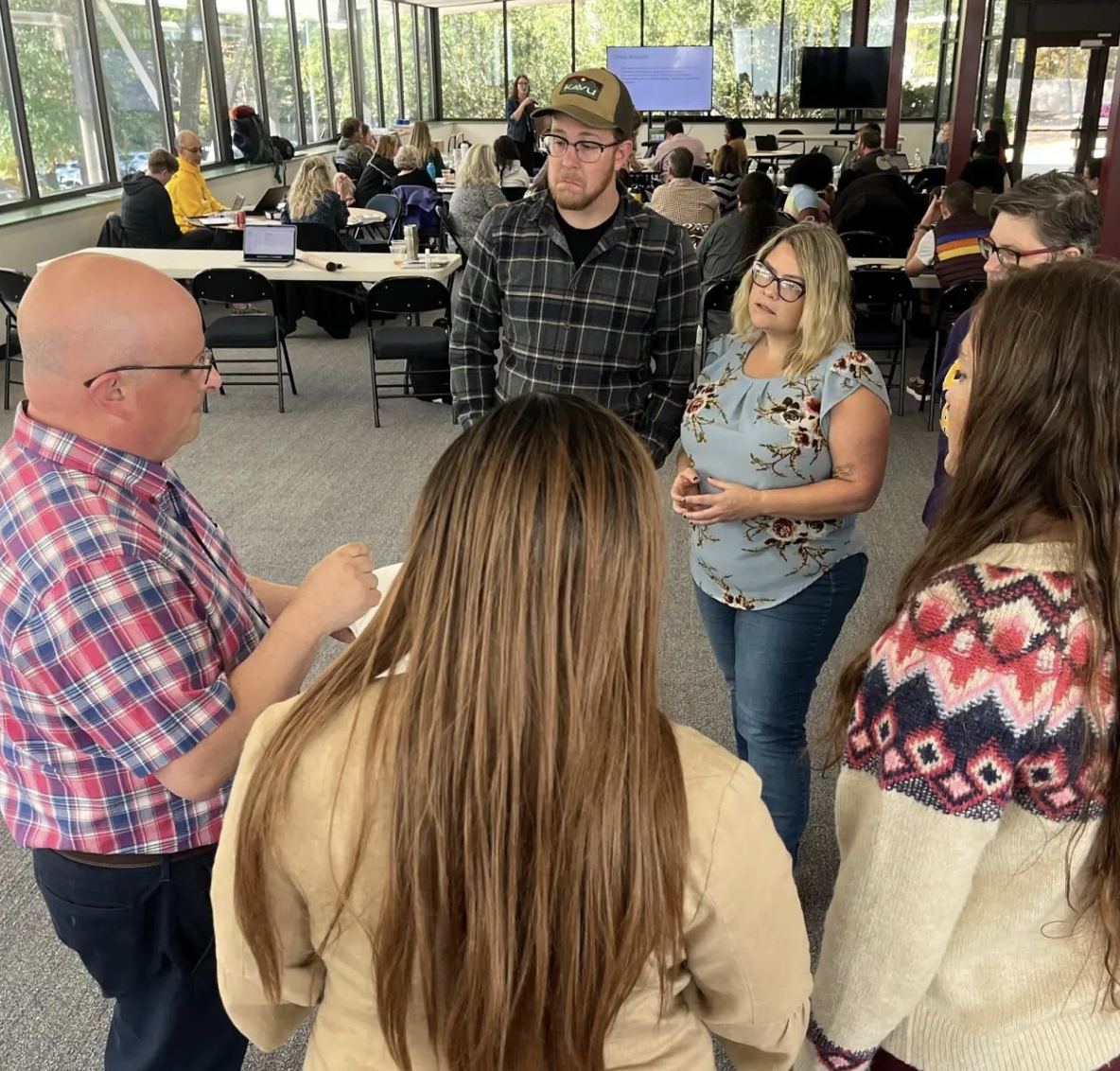
Tuesday October 24, 2023I had the incredible honor of presenting at the Kenan Fellows Program’s Fall Institute last week. Aside from having to follow the amazing Phil Boyte, the toughest part of providing professional development to this amazing group of educators is making sure that the quality of the presentation matches the quality of the audience.
I was blown away by the engagement and conversation that the #Great38 brought to this session. Check out the slides below:
-
Saturday May 6, 2023
TeachThought’s Article about “What Teachers Need”
In general, I’m not a fan of these “listicles”, but Terry Heick does a great job of adding editorial content that explains why each of these items is important to teachers.
I also happen to agree with most of this list. The section on hierarchies among teachers is really salient:
“It is often clear in a building who is where in the pecking order. ‘Teacher leaders’ versus teachers favorited by administrators. Teachers in ‘tested’ content areas (e.g., math) versus non-tested content areas (e.g., art). Teachers who the students loved and teachers who the parents were constantly questioning (which in and of itself can often be a good thing that’s a sign of a deficit), the hierarchy of teachers in schools never seems to make for positive results.”
-
Monday April 17, 2023
“I’m merely offering more to those who want to help me afford rent, groceries, and a used scooter for getting around town. Think of it as Education+.”
Fantastically funny (and starkly accurate) piece from McSweeney’s by Perry Kent
-
Wednesday March 8, 2023
I’m working on some teacher PD around ChatGPT and the coming AIpocalypse, and I am blown away by how much this feels like the uproar over using calculators in class. I recognize the many differences, but I am excited about the shift from students learning to “generate text” to them learning to edit, proofread, fact-check, etc.
-
Wednesday February 1, 2023
If you aren’t reading the Atlas Obscura blog, you are missing out. I have always loved the writing in their book and their website that explore little-known locations all over the world. At the end of every year, they collect their favorite Science stories into one article. Check it out!
-
Sunday January 22, 2023
The teacher shortage in Mississippi is among the worst in the nation - The Washington Post
Not sure whether it feels better or worse to know that other schools are experiencing this dire shortage of teachers.
-
Sure, grades aren’t so bad. If this is how you define grades.
Monday January 16, 2023Most folks who know me also know how I feel about grades.
I am not a fan.
And the reasons that I dislike grades so much are easy to understand. They stop learning. They create unhealthy pressure on kids. They don’t give students a way forward. They don’t successfully accomplish their primary goal: to communicate learning progress with stakeholders.
But, in the words of the great Thomas Guskey, grades can be useful, if they meet four conditions:
-
Grades must be assigned to performance, not to students. By this, he means that we should make it clear to students that a grade is about measuring their learning and not a personal insult. Of course, this is true. But the problem is that the history of grades makes this impossible. Students (and their parents) have been punished by grades for their behavior/attention/participation.
-
Grades must be criterion-based, not norm-based. Agreed.
-
Grades must be seen as temporary. Yes, definitely. But how? Grades are recorded on report cards and cumulative folders and are used as part of the GPA to determine eligibility for everything from sports to scholarships. Saying that grades would be useful if they were temporary is like saying that knives would be safer if they weren’t pointy. The issue is that they are.
-
Grades must be accompanied by guidance for improvement. Definitely. But they aren’t. It feels like Guskey is trolling the gradeless community by basically saying that grades aren’t so bad, as long as they do all these things that they don’t do (and gradeless systems do).
-
-
Wednesday December 28, 2022
I love the focus on making students more independent in their learning. But I can also relate to the concern that students become dependent on us when we are engaging and exciting at the front of the room
-
Why is this school year SO much more exhausting?
Thursday December 22, 2022Spend any time in online teacher communities or talking to educators this year and you will inevitably hear them express with exhaustion in their voice what a tough year this has been.
But dig a little deeper and it gets more difficult to put your finger on exactly what is different about this year. Is there more work for teachers? Yes. Are we covering classes and writing lessons for vacant positions? Definitely. Are the students less mature than we normally expect for their age? Of course.
And when I try to explain it to non-educators, here is how I make it clear.
For most years of my career, I’ve spent the start of the year teaching my students how to learn, so that I can guide them gently through the rest of the year. I compare it to what it’s like to go surfing. You work hard paddling out to the break. But then you let the wave push you while you work to keep the board in the right spot. There is a zen flow state that you fall into along with your students when their desire to learn and to succeed takes over from the extrinsic motivation that we work hard to provide at the start.
—
But this year feels like that transition never comes. We keep paddling and paddling but the wave never takes over. The momentum never transfers to the students. They don’t seem to be able to become independent in their learning. The behaviors that they usually shake before eighth grade—throwing paper balls, chasing each other around the classroom—are present and persistent. Combined, the effect of disruptive behaviors and reluctance to motivate themselves is like paddling against a current all day every day.
And that’s the look you see in our eyes.

photo credit: MidJourney -
One Reader to Rule Them All
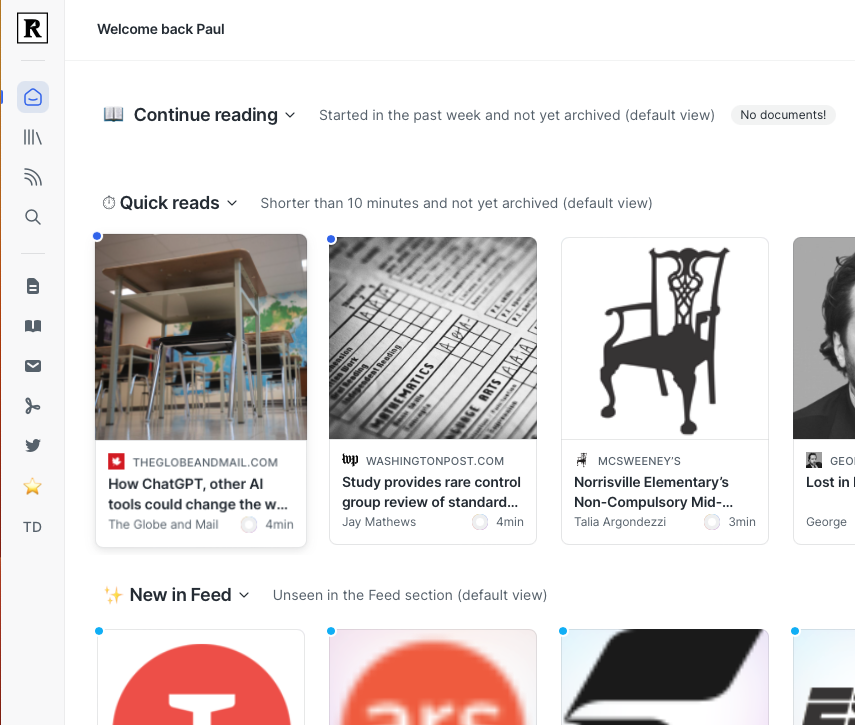
Monday December 19, 2022I’ve been an avid reader on the Web for a while now, as I know many of you are. I’ve had RSS reader apps (Google Reader RIP, Feedly, Reeder), read-later apps (Pocket, Instapaper) and even highlighting apps (Diigo). But until now, I needed to stitch together different tools to do all of those things. Sometimes I had to open several tabs/apps at once and that usually meant reading less.
Enter Reader from the good people at Readwise. It was just released in beta last week and it blows my mind. There is FAR more to this app than I can describe in this space, but suffice to say that it brings in your ebooks, Twitter lists, YouTube videos, and RSS feeds and presents them to you for reading/highlighting/sharing/archiving. It does it all in a super simple app that is SO much more powerful than it looks. I can now highlight important passages from what I’m reading and search for those passages later. I can use little chunks of time to catch up with “Quick Reads” or sit on the couch and dive into something longer. It’s acquisition, curation, and consumption all in one place.
Check out the beta app here.
-
Great Resignation, Great Recession, or Great Depression?
Tuesday December 13, 2022We’ve all heard about “The Great Resignation” when large numbers of employees quit their jobs at the tail-end of the COVID-19 lockdown after experiencing the benefits of working from home. We have seen the impact of the economy on individual workers as a shortage of potential workers has led to one of the lowest unemployment rates in recent memory. Normally, we would expect this trend to result in higher salaries—especially in skilled areas where the talent pool is limited to start with.
And that has been the case in most areas of the economy. I’ve experienced it myself in my second job working for a major tech company. My hourly wage has risen by more than 20% in the past year. But as public employees, teachers don’t get to benefit from this shift. State and local governments seem to be immune (blind?) to the economic forces that push wages up.
Add into this powder keg the increasing pressure of inflation on the cost of daily expenses. Like everyone else, teachers need to buy milk and gas, and pay mortgages, and buy Christmas presents—all while credit card interest rates are soaring.
Economists warn of the possibility of a recession that might stall economic growth. They fear that runaway prices might make life more difficult for everyone. Most white collar workers get to benefit from climbing paychecks to cushion this blow, but not teachers.
And so it’s no wonder—in a world of rising costs and stagnating pay—that so many teachers are choosing to walk away from the profession. For too long, we have relied on a sense of responsibility (or justice or guilt) to motivate teachers to accept lower salaries than their similarly-educated peers in other industries. But, like those who chose to walk away from low-paying jobs after COVID-19 lockdowns, teachers are putting their families and their mental health first and choosing better paying jobs with less stress, more professional freedom, and more sustainable working conditions.
Let’s be crystal clear. Teachers that are changing careers are not giving up. They are not being selfish. They are choosing to protect themselves from the inevitable burnout and depression that come with being a public school teacher in 2022.
But, until the Powers That Be finally make changes that will bring them back to the classroom, remaining a teacher right now is very much like trying to hold up the same gigantic boulder with fewer hands. Those that remain are carrying a heavier and heavier load every day. Our energy level and mental health are waning.
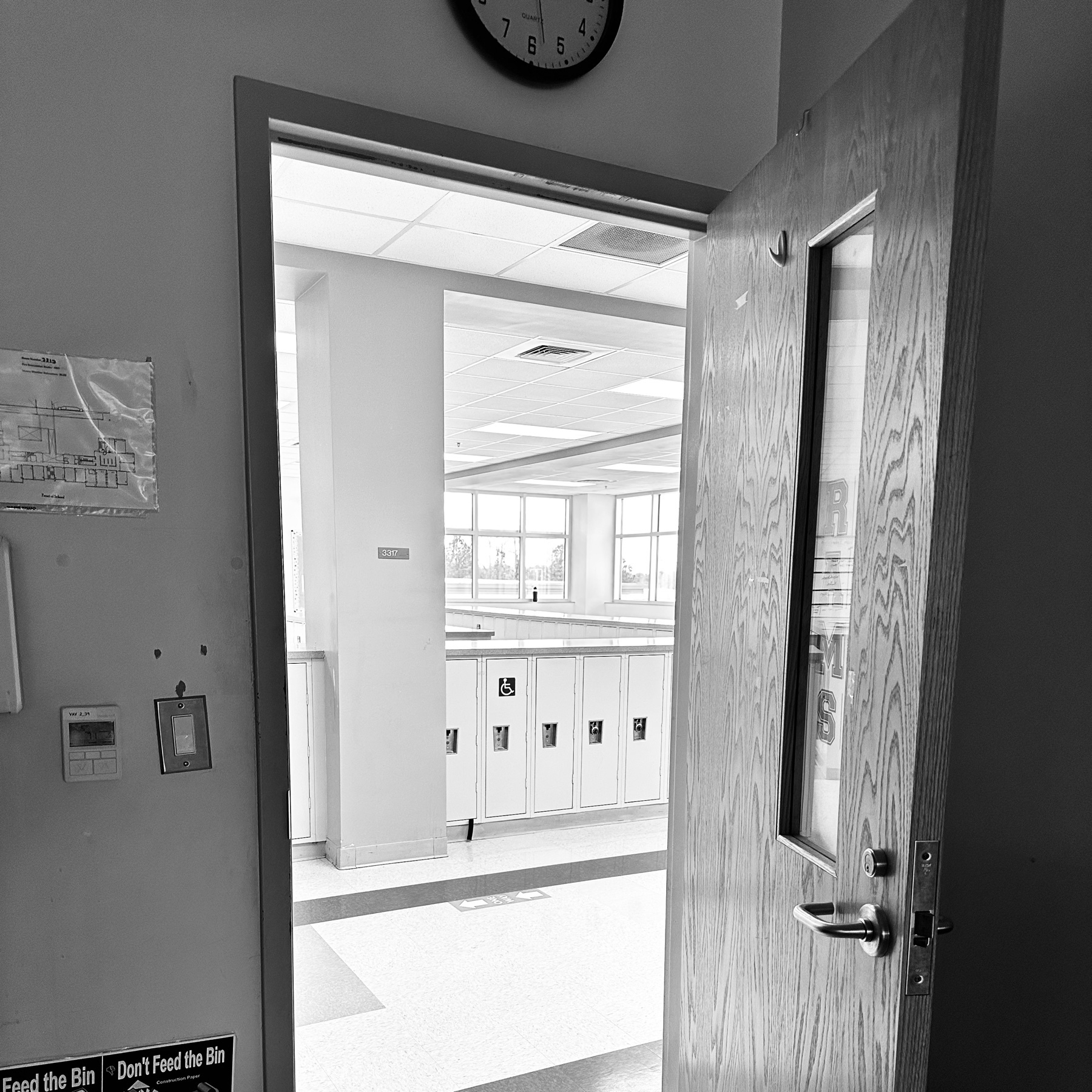
And when we glance at the doorway, it’s as much to see if someone is coming to help us… as it is to consider walking out through it ourselves.
-
Mulling over Mastodon
Wednesday November 9, 2022Like many in the Twitterverse, I am currently exploring whether that is still the best network for me to cultivate and participate in. The trend has been heading in a negative direction for a while, but recent changes have me (and millions of other “bird app” users) considering some of the alternatives.
Since it first rolled out 6 years ago, I’ve had a Mastodon account as well. Mastodon is a very (very very very) different platform for sharing ideas and learning from others. It’s federated independent server/instance model allows moderators to control the content on their corner of the internet while still letting users follow and communicate with everyone else on the Mastodon platform.
This week, Bill Ferriter (@plugusin on Twitter and @plugusin@mindly.social on Mastodon) shared an invite to the Mindly.social instance for those that want to explore this alternative with us. Check it out here:
Started tinkering around with Mastodon today as a Twitter alternative. Still planning on staying here for now, but wanted to explore options.
— Bill Ferriter (@plugusin) November 8, 2022
Here's an invite link to the "instance" I'm on if you want to experiment with me:https://t.co/ybquFWDzjm -
AMLE 2022
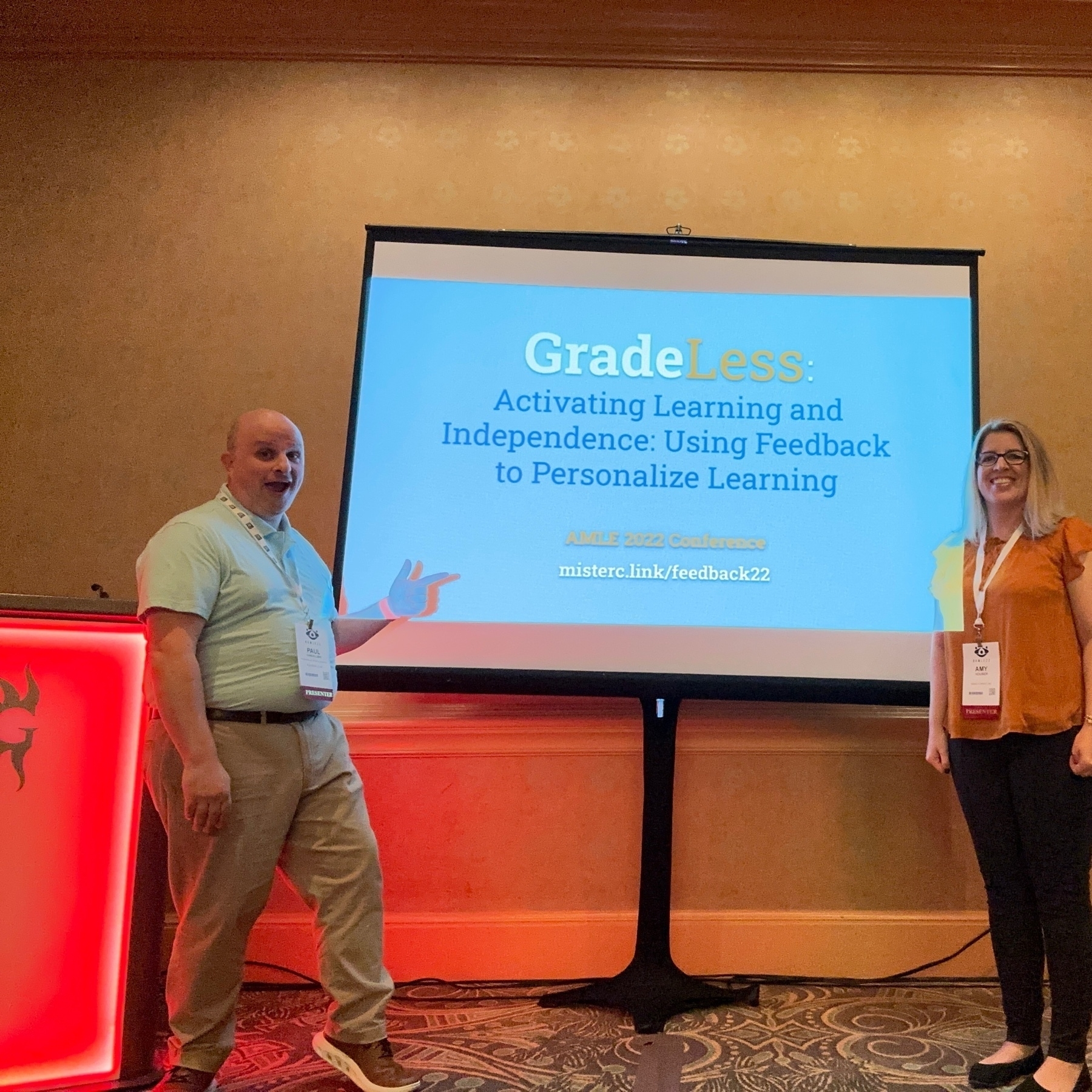
Saturday November 5, 2022My teammate and thinking partner—Amy Houser—joined me this week in Orlando for the annual conference of the Association for Middle Level Education. We shared a revamped version of our Gradeless Classroom presentation. You can check it out here: misterc.link/feedback2…
-
WCPSS Convergence 2022
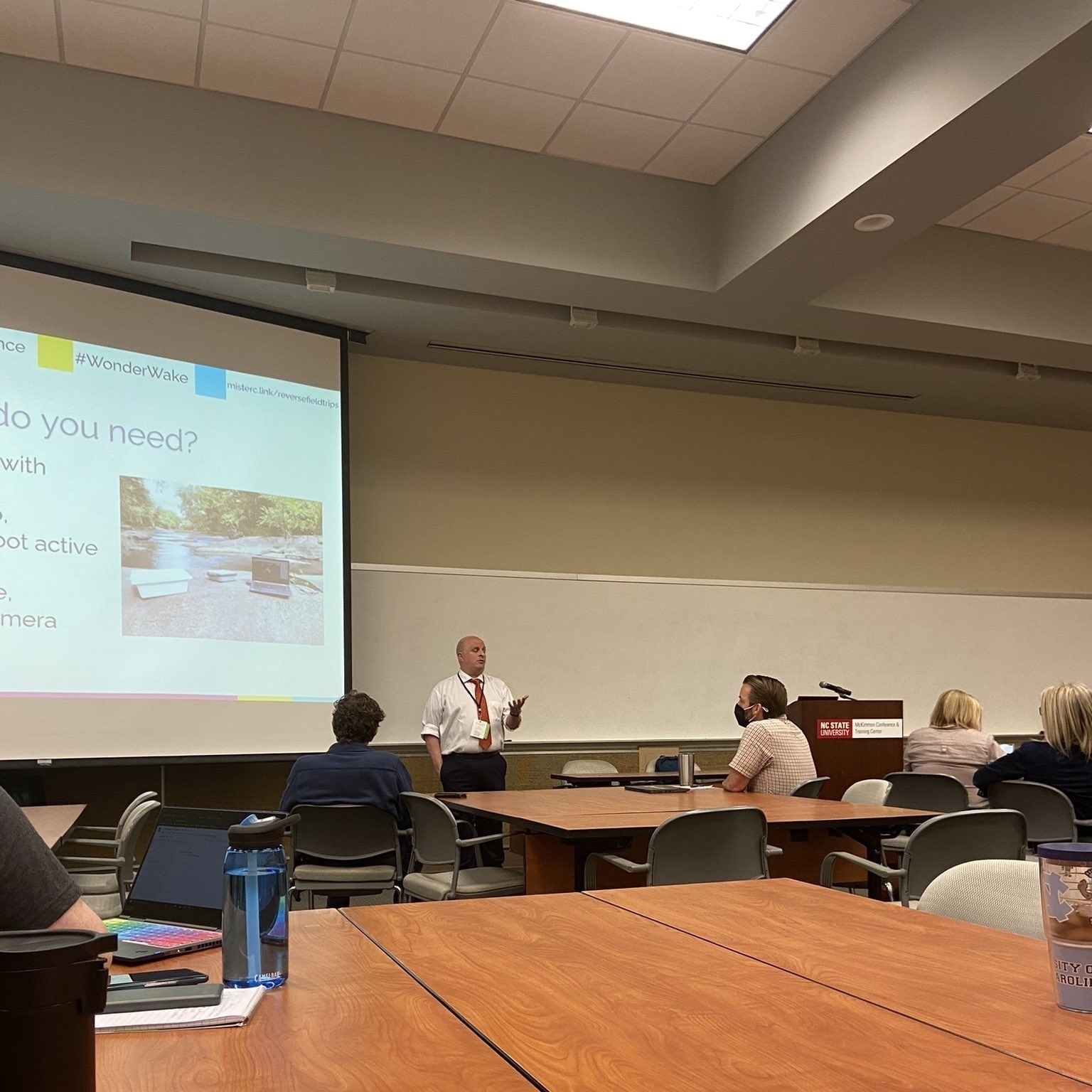
Wednesday November 2, 2022It’s conference season! My second presentation of the fall was to our district EdTech conference and I used the opportunity to share about the Reverse Field Trips I did with my students while teaching remotely. Here is my slide deck: misterc.link/reversefi…
-
Choosing Professional Development
Thursday October 20, 2022This is a tough time in education. Immature students, no subs, no funding.
But today I was reminded of why I need to make time for professional development. That bucket won’t fill itself.
Alumni @mrscienceteach and @ITEACH2U2 (KFP program) manager delivering a session on maintaining a culture of trust in the school community. pic.twitter.com/grRJGNAvI7
— Kenan Fellows (@kenanfellows) October 20, 2022 -
Saturday October 1, 2022
It’s nice to hear Kyle’s voice in my head when reading his most recent post. Definitely resonates with me and my push to write more.
-
Learning to love writing again
Tuesday September 27, 2022The truth is that I love writing.
I enjoy sharing my thoughts and I enjoy reading what I have written.
But it is also true that my life doesn’t allow me enough time to write as much as I would like. Or rather, I don’t choose to create the time that I need to write. I teach middle school science. I troubleshoot and repair Apple devices. I try to parent a couple of teenagers. I try to fix what’s wrong with public education. It’s a lot.
I’m proud of the blogging that I have done under the ScriptedSpontaneity banner over the past 15 years. But I also need a sustainable way to write. And that’s why I’m using this micro.blog space as a new home for the blog. I am a HUGE fan of this team and the project that they have created. I also LOVE the way it encourages a focus on the words. This is what I need right now.
I’m starting fresh. I’m not bringing over my archive of articles. I’m not building this new space on top of anything else. Here is what you can expect:
-
I will post here at least weekly.
-
The posts will be short and often links to content that has been thinking. Content that deserves a conversation.
-
The conversation will live on Twitter.
Thanks for joining me in this new adventure. I hope that it gets you as excited as it does me.
-